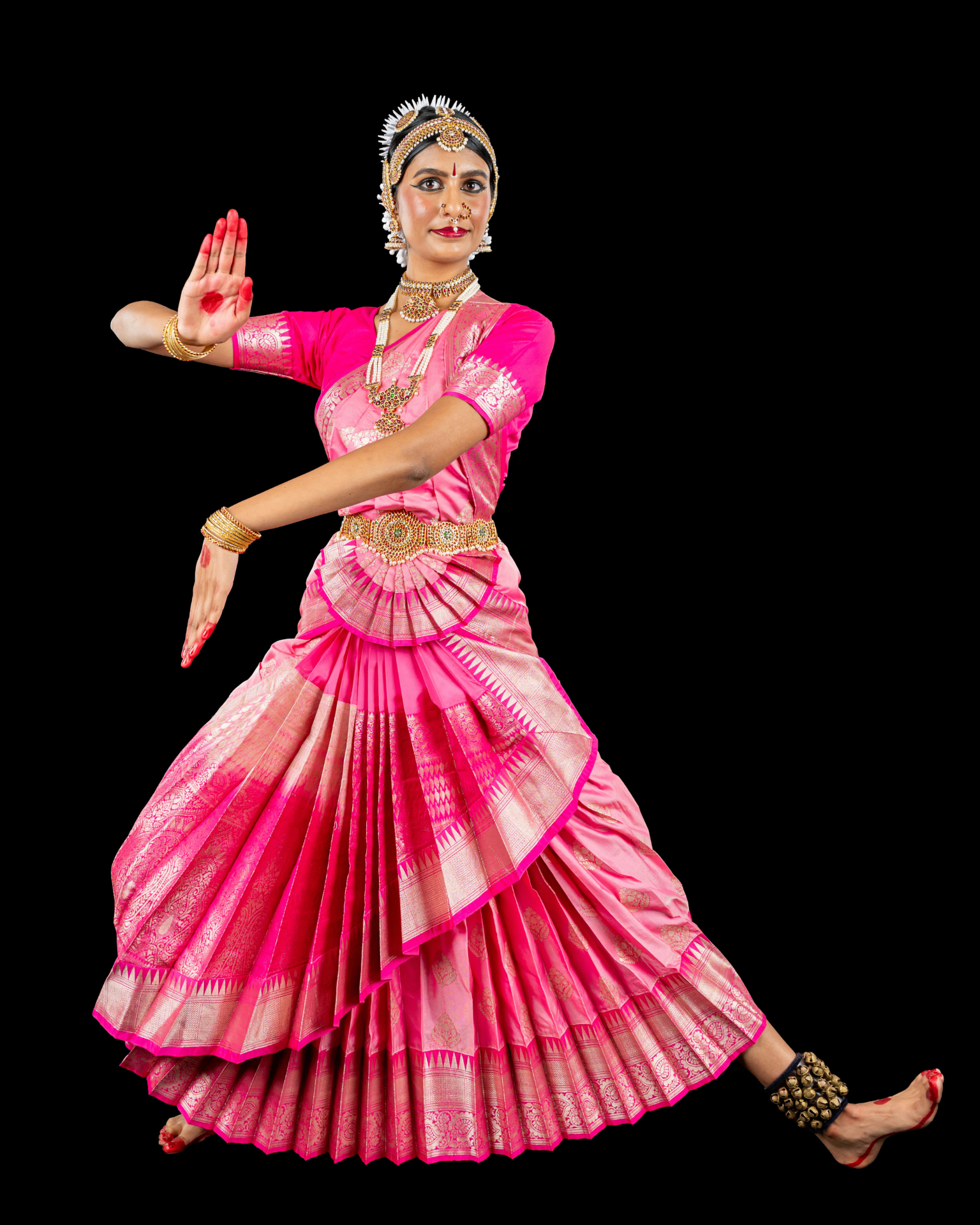
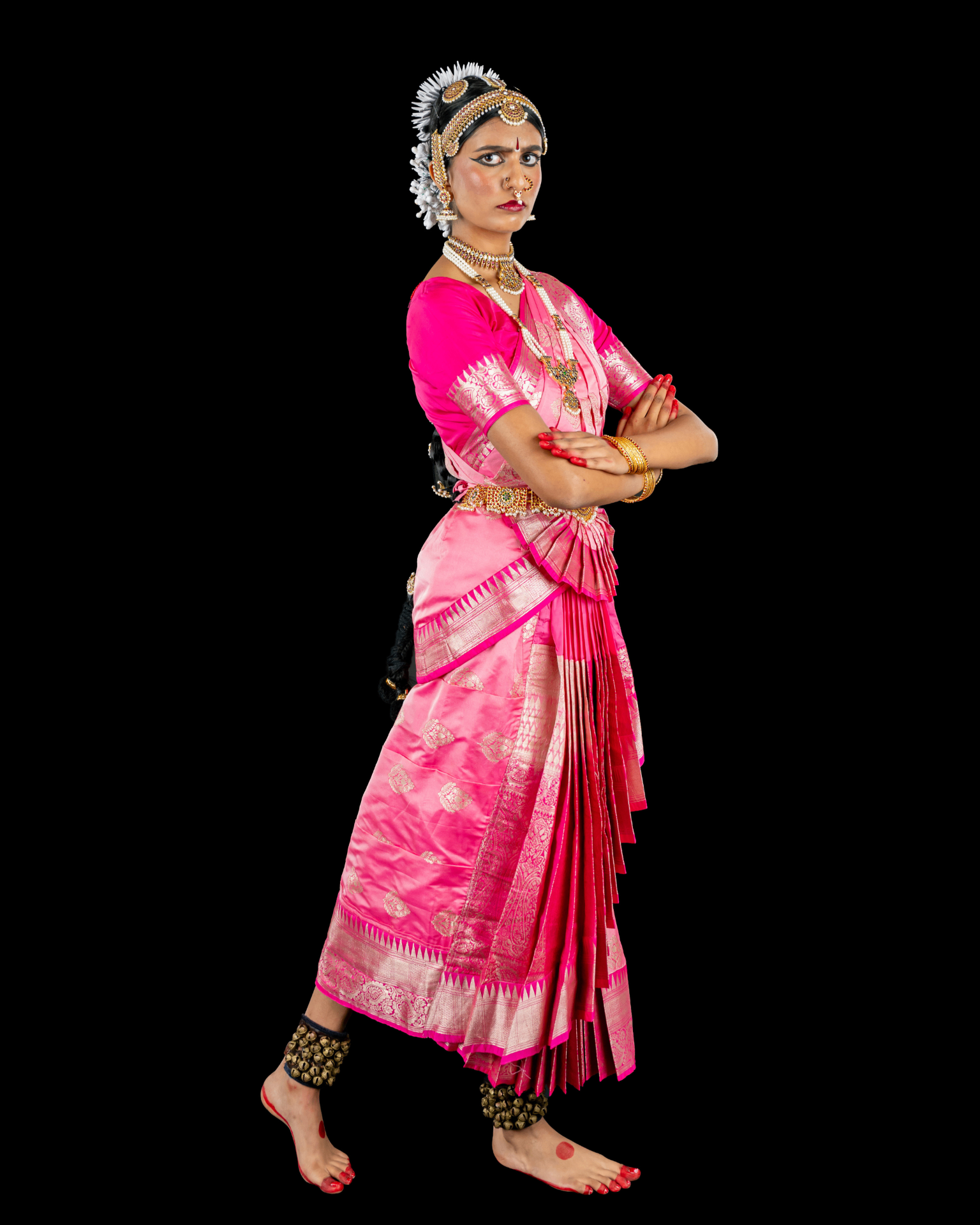
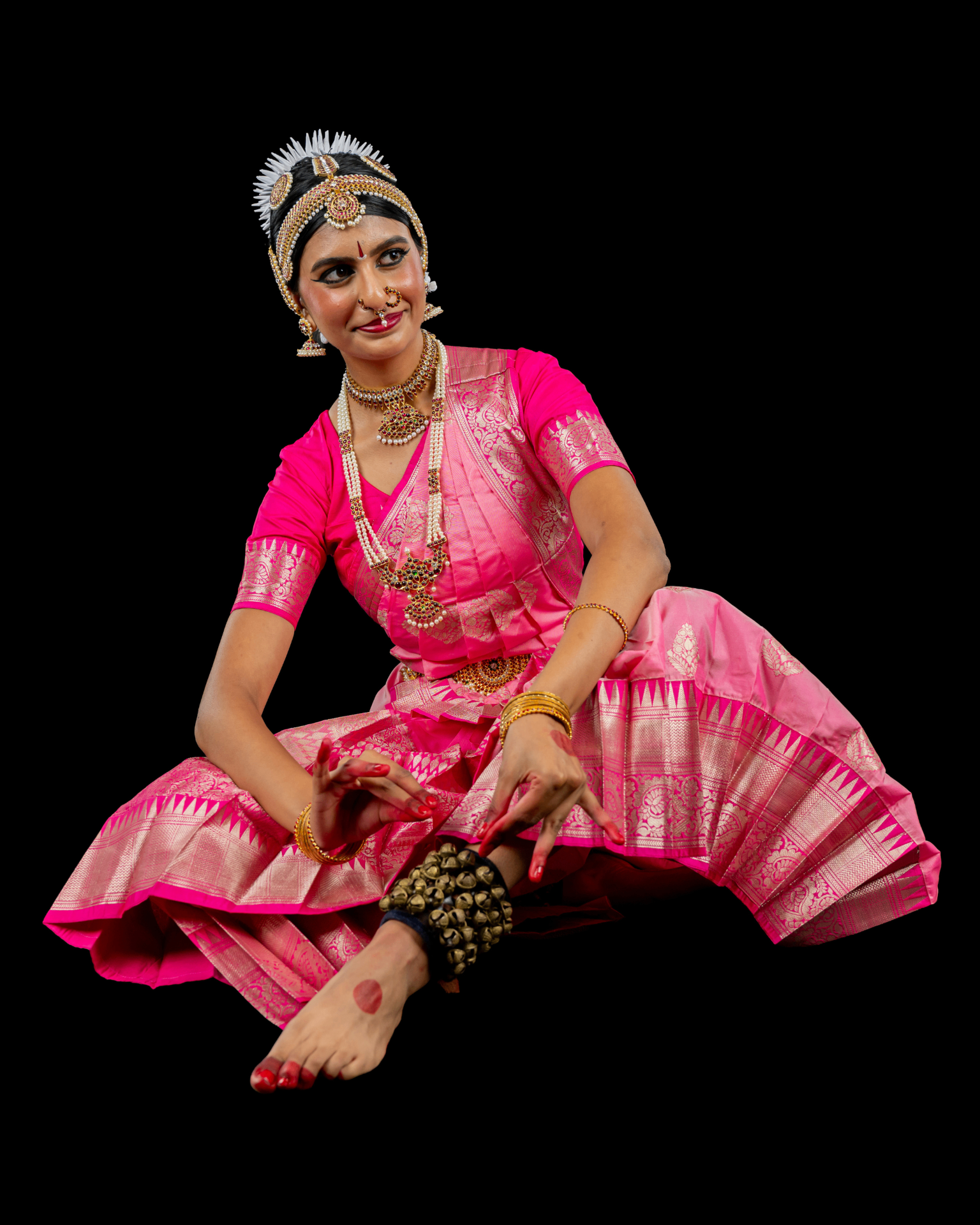
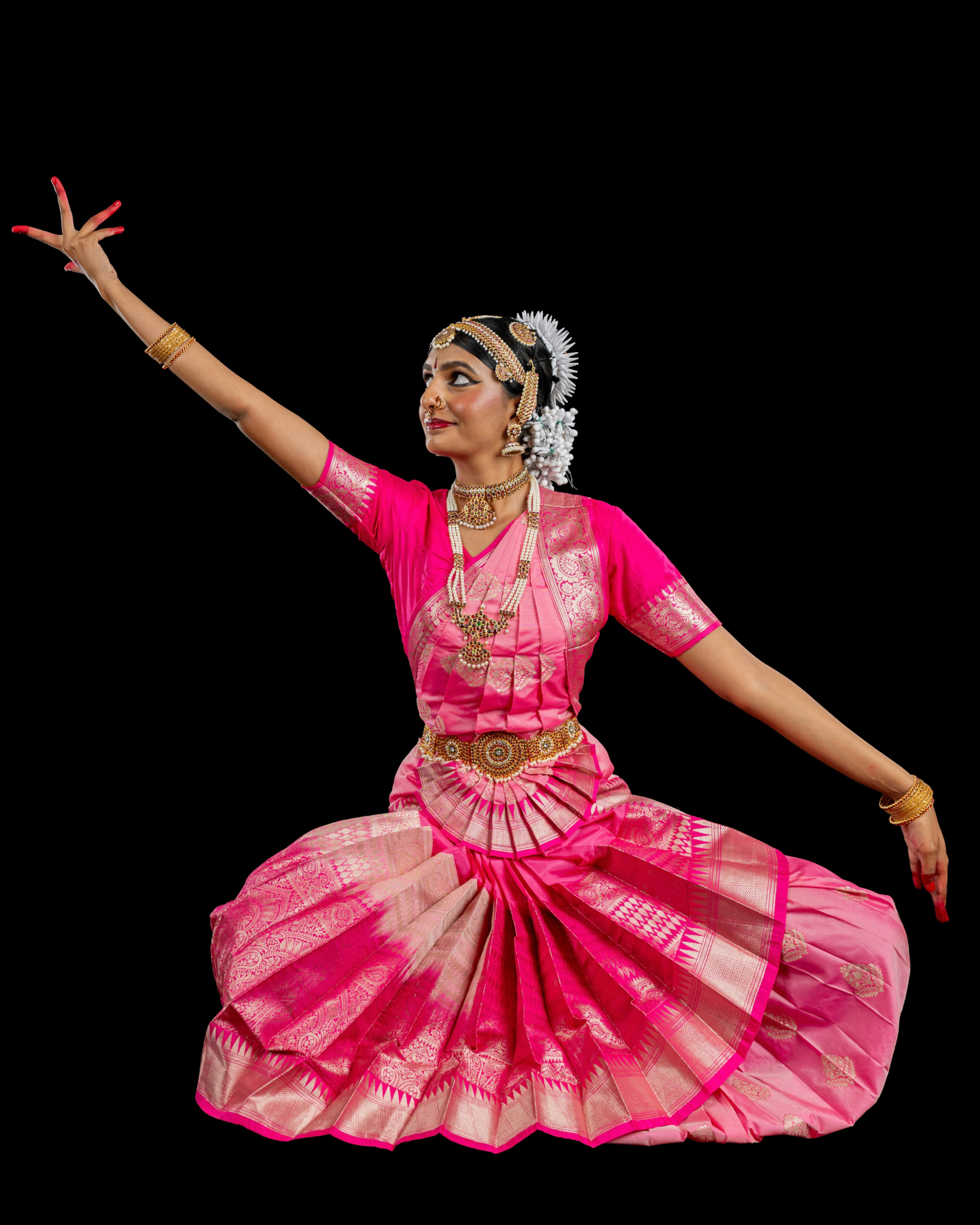
Diya Shah's Arangetram

The repertoire

Program

The evening unfolds in the traditional margam order — from invocation, through the elaborate Varnam centerpiece, into devotional storytelling, and closing with the Thillana and Mangalam.

  1. I

    Invocation

    Pushpanjali, Sri Vigna Rajam & Alarippu
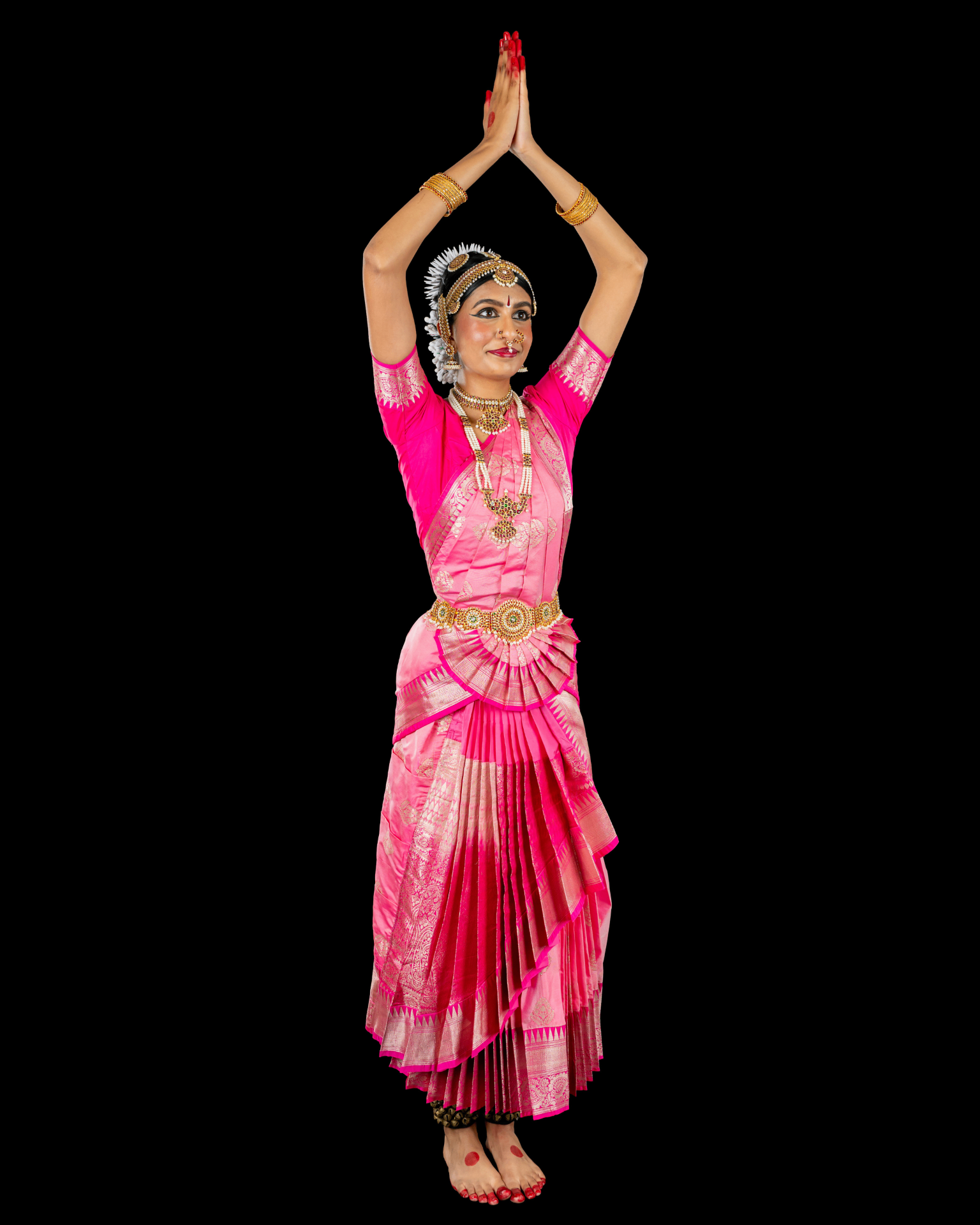
    Photograph for Pushpanjali, Sri Vigna Rajam & Alarippu
    Ragam
    Gambheera Nattai
    Talam
    Khanda Chaapu (Sri Vigna Rajam); Chaturasram (Alarippu)
    Composer
    Uthukaadu Venkatasubbaiyer
    Language
    Sanskrit

    Pushpanjali is an invocatory dance performed at the beginning of a Bharatanatyam performance. The dancer offers her salutations to Lord Nataraja, the Guru, the musicians, and the audience.

    This is followed by a Kriti, Sri Vigna Rajam, a composition in praise of Lord Ganesha. It describes the various attributes of the elephant-faced lord, who is the remover of obstacles and is the son of Siva and Parvati.

    “I bow to you, Lord Ganesha. I seek refuge in that lord who is the remover of all obstacles. He who bears the head of an elephant, who is the son of Lord Shankara and Devi Shankari. He who is worshipped by Lord Indra, who grants boons to his devotees, and who is worshipped by devas and devotees.”

    The opening piece is concluded with an Alarippu. Alarippu indicates blossoming. It is traditionally performed at the beginning of the recital and has a series of intricate facial, eye, and neck movements. The movements of the Alarippu relax and prepare the dancer's mind and body for the recital.
  2. II

    Jatiswaram

    Photograph for Jatiswaram
    Ragam
    Raagamalika
    Talam
    Misra Chaapu
    Composer
    Tanjore Quartet

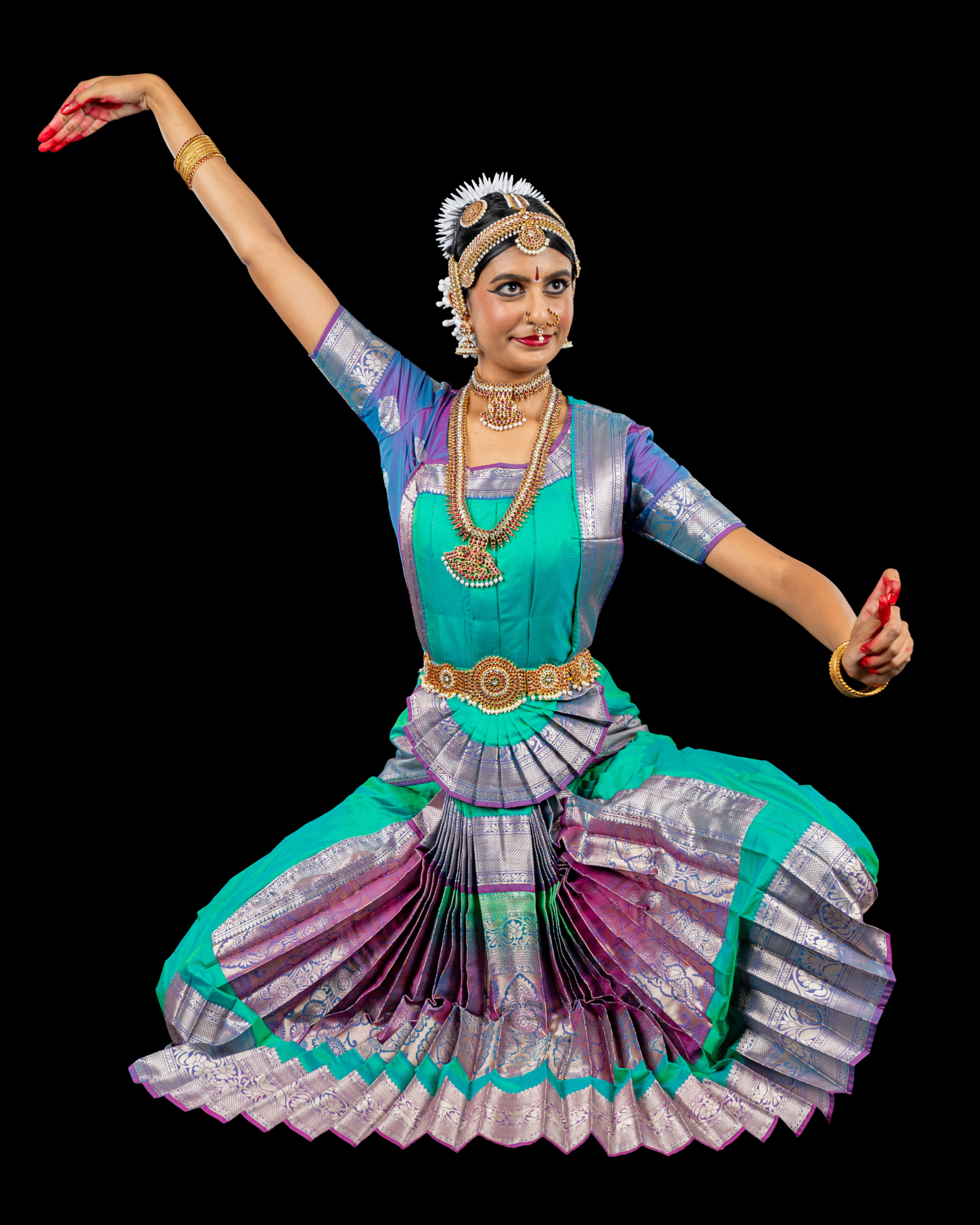
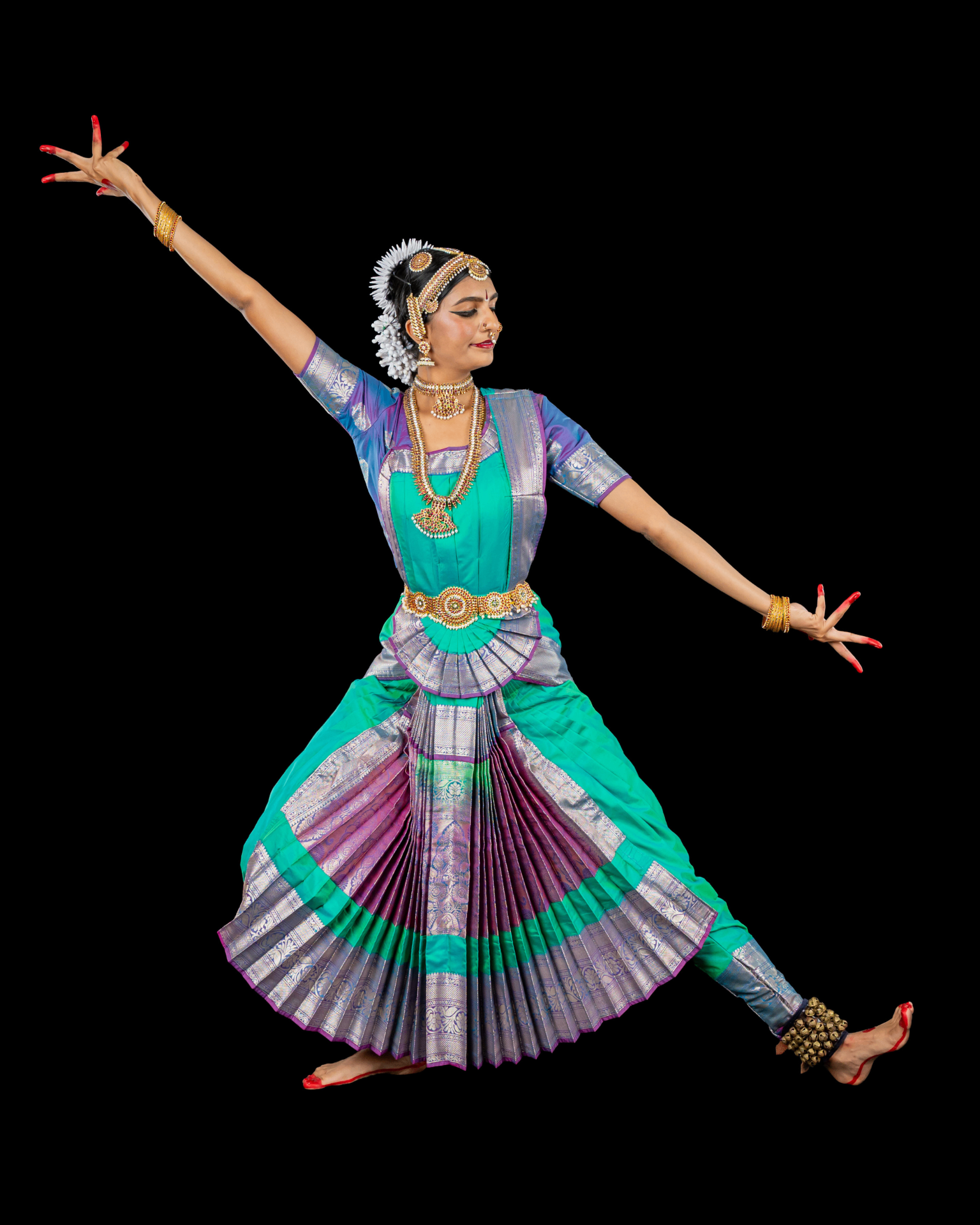
    The Jatiswaram derives its name from “Jatis” (drum syllables) and “Swaram” (solfa syllables). The music is characterized by swarams set in varied melodies and rhythmic cycles. Intricate dance patterns are knitted together, depicting nritta — pure abstract dance — in the style of Bharatanatyam.

  3. III

    The centerpiece

    Varnam — Maathe Malayadvaja

    Photograph for Varnam — Maathe Malayadvaja
    Ragam
    Kamas
    Talam
    Adi
    Composer
    Harikesanallur Muthiah Bhagavatar
    Language
    Sanskrit and Kannada

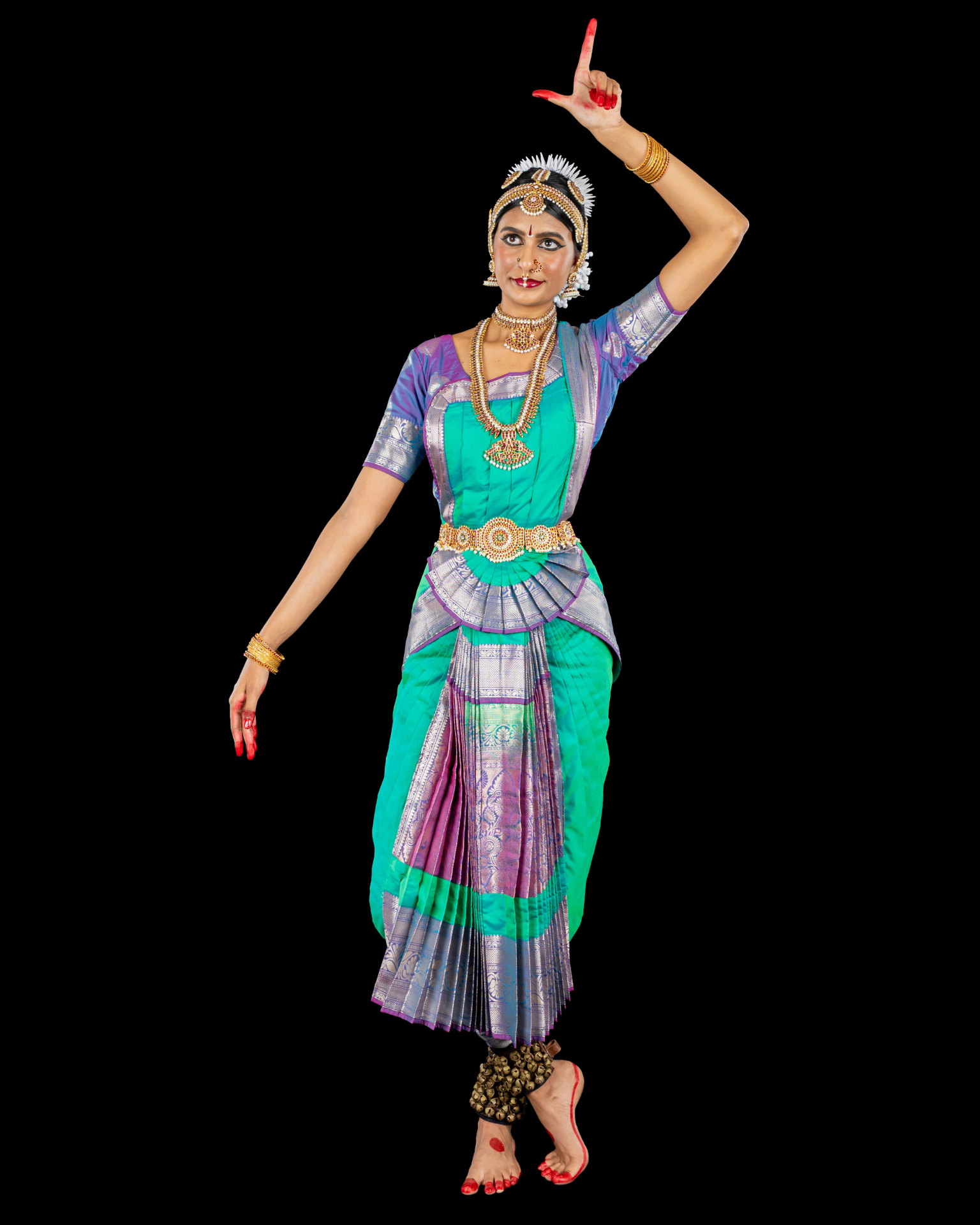
    The Varnam is the most elaborate and intricate piece of a Bharatanatyam performance. It combines Nritta, or rhythmic abstract dance, with Nritya, or expressional dance. This Varnam describes the goddess Meenakshi, daughter of the Pandya king Malayadwaja, and the mother of the elephant-headed god Ganesha and his brother Muruga.

    The goddess was born from the sacrificial fire held by King Malayadwaja. As she grows up, she becomes skilled in many arts, including playing the veena, singing, and archery. She conquers neighboring kingdoms and comes to Mount Kailash. She encounters Lord Shiva and challenges him to a battle, only to realize he is the one destined for her. She later marries Lord Shiva.

    The Varnam describes Goddess Meenakshi as slender-waisted, having coral-like lips, bow-shaped eyebrows, a conch-like neck, and creeper-like arms. She is also portrayed as a fierce goddess who killed several demons — earning her the name Chamundeshwari.

  4. IV

    Nagendra Haaraya — Shiva Panchaakshara Sthothram

    Photograph for Nagendra Haaraya — Shiva Panchaakshara Sthothram
    Ragam
    Ragamaalika
    Talam
    Taalamalika
    Composer
    Adi Shankara
    Language
    Sanskrit

    This composition is in praise of the five syllables of the mantra “Namah Shivaaya” — Na, Ma, Shi, Va, and Ya — with each syllable dedicated to the divine qualities of Lord Shiva. The opening verse salutes Shiva as the one adorned with a garland of serpents, the three-eyed lord smeared with sacred ashes, and the eternal and ever-pure one.

  5. V

    Maiyyaa Mohee Dhaau Bahuth Khijhaayo

    Photograph for Maiyyaa Mohee Dhaau Bahuth Khijhaayo
    Ragam
    Basanth Bahaar
    Talam
    Chaturasram
    Composer
    Surdas
    Language
    Braj Bhaasha

    In this composition, little Krishna cries to his mother after his older brother Balarama continually teases and mocks him. Balaram and his friends tell Krishna that he is not really Yashoda and Nanda's son, that he was bought for money, and that he is too dark, unlike his fair-skinned parents.

    As Krishna complains to Yashoda, he becomes agitated and runs out of the house. Yashoda consoles him, swearing upon the cows that she is indeed his mother and that he is — without doubt — her son.

  6. VI

    Paga Ghunghuroo

    Photograph for Paga Ghunghuroo
    Ragam
    Misra Peelu
    Talam
    Chaturasram
    Composer
    Meerabai
    Language
    Braj Bhaasha

    In this piece, Saint Meerabai — donned with ankle bells — dances at the feet of Lord Krishna. She is his devoted servant and asks for his blessings and protection. The people around her believe she is mad, but after drinking a poison given to her by the wicked Raana, she comes to no harm by the grace of Krishna.

    She praises him as the one who lifted the mountain Govardhana on his finger as an umbrella, protecting all the cowherds from the torrential rain caused by a vengeful Indra.

  7. VII

    Thillana

    Photograph for Thillana
    Ragam
    Raageshri
    Talam
    Aadi
    Composer
    Laalgudi G. Jayaraaman
    Language
    Telugu

    The Thillana is a fast-paced nritta piece consisting of pure dance sequences. It combines varied tempos, rhythmic precision, poise, and sculptural poses. The concluding lyrics are in praise of Lord Shiva.

  8. VIII

    The final bow

    Mangalam

    Photograph for Mangalam

    The recital concludes with the Mangalam — a final offering of gratitude to the divine, to the guru, to the musicians, and to the audience whose blessings have made this evening possible.

Photos: Madhu Pai